01
Adaptive layer-wise quantization
4–8 bit integer precision per layer, chosen dynamically from gradient-norm history — replacing FedSparQ's fixed FP16 scheme with something that actually responds to how much each layer is changing.
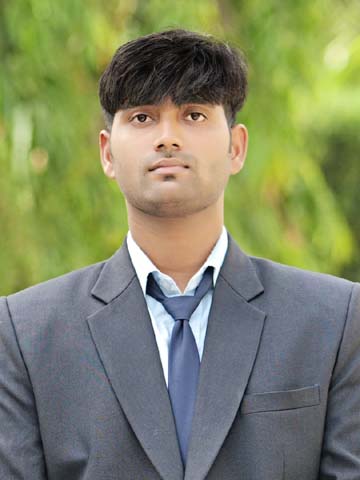
M.Tech · IIT Jodhpur . Researcher
I'm Tabrej Alam — a federated learning researcher building communication-efficient training systems for resource-constrained devices. My current work, EF‑AdapSparseQ, pushes adaptive quantization and error-feedback past fixed-precision baselines under heavy non‑IID conditions.
live render — client ↔ server gradient exchange
I'm currently pursuing my M.Tech in Electrical Engineering (Sensors & IoT) at the Indian Institute of Technology, Jodhpur, ranked 2nd in the ongoing batch. My thesis sits at the intersection of federated learning and model compression — specifically, how to quantize and sparsify gradient updates so that edge devices with limited bandwidth and compute can still train collaboratively without leaking raw data or collapsing under non‑IID conditions.
I am also to design and build production-grade, AI-native platforms. Looking to leverage expertise in Python, full-stack architectures, and GenAI integration to develop scalable, reusable enterprise solutions and intelligent agents.
Before this, I completed my B.Tech in Computer Science & Engineering at HNB Garhwal University, where I built full‑stack web applications and explored applied machine learning — a foundation that now shows up in how I engineer FL simulation pipelines rather than just theorize about them.I'm preparing my current results — EF‑AdapSparseQ — for presentation to my thesis supervisor and for submission to IEEE Access, framed around accuracy‑per‑bit gains under severe non‑IID data splits (α = 0.1).
My thesis proposes EF‑AdapSparseQ, extending FedSparQ with three concrete innovations aimed at communication-efficient, robust FL on edge hardware.
4–8 bit integer precision per layer, chosen dynamically from gradient-norm history — replacing FedSparQ's fixed FP16 scheme with something that actually responds to how much each layer is changing.
A coarse‑to‑fine bit-width schedule driven by gradient-norm trends, so early noisy rounds spend fewer bits and later, more meaningful updates get more precision.
Each client retains its own EF buffer to carry forward quantization error, preventing gradient drift under heavy non‑IID partitioning.
Error-feedback buffer norm converges near zero (~0.021 at round 15) versus FedSparQ's persistent oscillation (~0.23) — empirically supporting the convergence theorem behind the method.
Real-time gesture and color-based motor control. Hand detection at 120ms, color detection at 85ms — 95% gesture accuracy, 92% color-detection accuracy.
Frame your Federated Learning research as an enterprise-grade, communication-efficient distributed AI system. Emphasize optimization, latency reduction, and privacy-preserving model aggregation.
Classical ML pipeline using Python and Scikit-learn, reaching 92% classification accuracy on spam vs. legitimate mail.
Web application for managing events, bookings and schedules end‑to‑end, improving event scheduling efficiency by roughly 40%.
A desktop scientific calculator built with a Python GUI toolkit — clean operator precedence handling and a no-frills interface.
Currently ranked 2nd in the ongoing M.Tech SIOT programme at IIT Jodhpur
Qualified GATE 2025
UGC NET JRF Topper 2026
Graph Theory Programming Camp Certificate — AlgoUniversity
Open to discussions on federated learning, edge AI, model compression, or full-stack collaboration. Reach out directly — no intermediary server required.